What it really means to automate a process
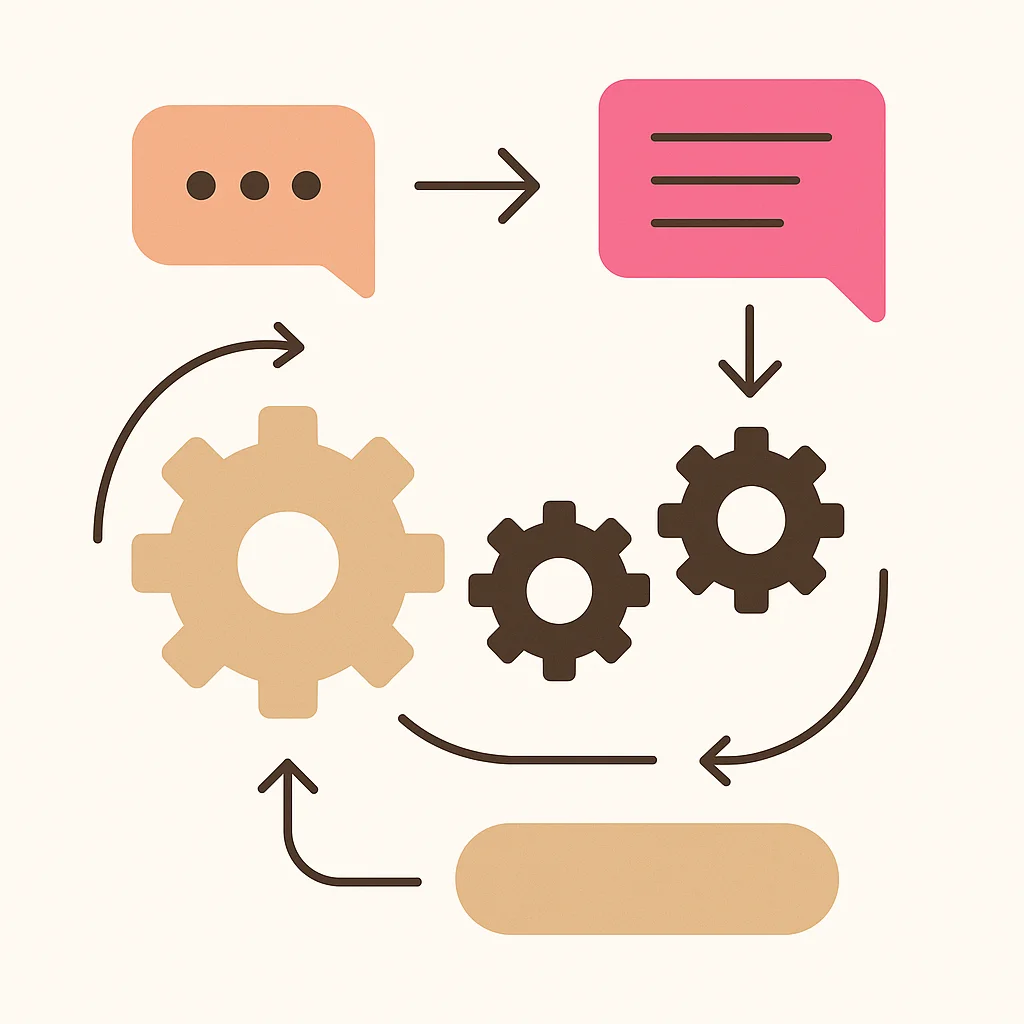
The word «automation» is one of the most overused in contemporary management vocabulary. It is employed to describe things as different as running an Excel macro, integrating two enterprise systems, or building an autonomous agent with decision-making capability. The indiscriminate use of the term makes it hard to have useful conversations about what can and cannot be automated.
Automating a process is not, first of all, a technical act. It is an act of understanding.
Understanding before executing
Before automating anything, it must be understood. This statement, which seems obvious, is the one most frequently ignored. Most automation projects that fail do so because someone automated a process nobody fully understood, and the system ended up perpetuating inefficiencies that human intervention had been masking.
Any manual process always includes a significant number of implicit decisions that operators make without noticing: which exceptions to handle, which data to correct on the fly, which cases to escalate, when to deviate from the standard procedure. Those implicit decisions are invisible until someone tries to codify them. Then they all appear at once and the automation project becomes, de facto, a process reengineering project.
Three levels of automation
A useful classification distinguishes three levels.
Reactive automation. The system executes a predefined task when a specific event occurs. These are the simplest, the most reliable and cover eighty percent of useful cases in an organization. Scheduled scripts, conditional rules, system integrations. They do not require artificial intelligence.
Complex rule automation. The system applies a set of rules covering multiple scenarios, including edge cases. They are more fragile because rules tend to grow until they become unmaintainable, but when well-designed they offer the best cost-to-outcome ratio.
Judgment-based automation. The system makes decisions with some degree of autonomy, usually using a trained model or a language model. It is the most powerful and the most expensive to build, maintain and validate. It only makes sense when the previous two levels do not solve the problem.
The contemporary temptation is to skip the first two levels and jump straight to the third. That temptation is the source of most cost overruns in current automation projects.
The dismantling moment
A common mistake is to assume that an automated process will not need attention again. This is not true. Processes change, systems change, inputs change. An automation that works perfectly for a year can start to fail silently if it is not maintained.
For this reason, every automation should be delivered with a dismantling plan as well-designed as the implementation plan. If the automation stops being useful, how is it turned off without breaking the rest of the system? If the logic needs reviewing, where is the original decision documented? If someone who did not participate in the design has to touch the code, do they have enough context not to break anything?
These questions are not theory. They are what distinguishes an automation professional from someone who simply knows how to connect APIs.
Mandatory metric
Every automation should be delivered with an associated outcome metric. Not a technical metric («the system runs without errors») but a business metric: how much time it saves, how much cost it removes, how many decisions it frees from the human bottleneck. Without that metric, automation is an act of faith. With it, it is an investment that can be defended, reviewed and, if necessary, reversed.
Automating well does not consist of using the most sophisticated tool. It consists of understanding the process well enough to decide which part is automatable, which part is not, and which metric should move if the work is done correctly.